

The Backdrop Has Changed—Why Australia Is Still Talking Like It Hasn’t
A growing gap between reality and rhetoric is distorting how Australians understand risk, deterrence, and the strategic environment now unfolding around them.

Australians are not disengaged from national security.
They are being misled by omission.
And in a world where, as Keir Starmer put it, “the backdrop has changed,” that gap is no longer just uncomfortable.
It is dangerous.
We Are Using the Wrong Language for the Wrong World
Listen closely to how Australia talks about security.
“Hawkish.”
“Escalatory.”
“Provocative.”
These are not neutral descriptors. They imply choice. Intent. Aggression.
But those labels only make sense in a stable system.
We are no longer in one.
And yet the language persists—because it is easier to recycle familiar terms than to confront a fundamentally altered reality.
The result is a conversation that feels reassuring—and is fundamentally wrong.
Even Canberra Knows This Isn’t True
This is not a fringe observation. It is acknowledged inside the system.
As James Patterson warned:
Australians are being “lulled into a false sense of security.”
That is not commentary.
It is a signal failure.
Because the language used to describe risk has been softened to the point where it no longer reflects reality.
We don’t say “dangerous.”
We say “uncertain.”
We don’t say “coercion.”
We say “competition.”
We don’t say “deterrence.”
We say “hawkish.”
And in doing so, we are not clarifying the world.
We are misrepresenting it.
The System Has Already Broken
At the highest levels of leadership, the diagnosis is no longer contested.
The system has shifted.
Economic interdependence is being weaponised.
Rules are no longer reliably constraining behaviour.
Power is being exercised more directly, more frequently, and with fewer constraints.
As Keir Starmer stated:
“We have to actively take on the world as it is, not as we wish it to be.”
But Australian public discourse is still anchored in how the world used to function.
That gap is now a strategic vulnerability.
The Real Divide: Inward vs Outward Thinking
This is where a deeper fracture emerges.
In a recent interview, analyst David Satter argued that the United States has become increasingly inward-looking—losing sight of the ideological and strategic forces shaping the external environment.
That critique is uncomfortable—but it is instructive.
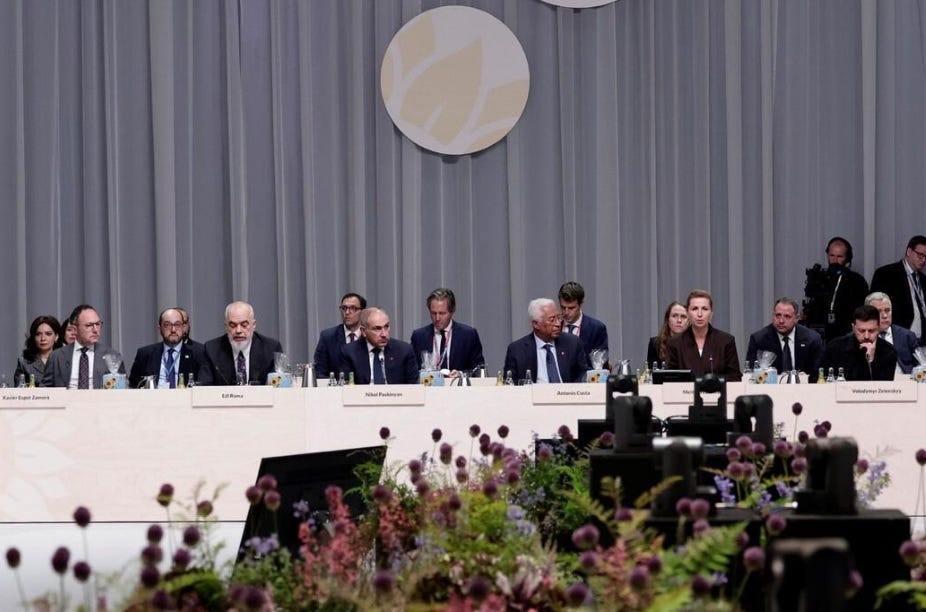
Because at the same moment, European leadership is moving in the opposite direction.
Under Ursula von der Leyen, Europe’s response to instability has not been retreat.
It has been expansion of partnerships.
Not isolation—but selective global engagement.
Not withdrawal—but strategic alignment with trusted partners across regions.
This is the critical distinction:
Inward-looking systems misread threats
Outward-looking systems reorganise around them
Europe is attempting the latter.
Australia’s public discourse still risks drifting toward the former.
We Are Misreading Adaptation as Aggression
Japan increases defence capability after sustained incursions—“hawkish.”
Australia deepens alliances—“provocative.”
This is not analysis.
It is inversion.
States are not becoming more aggressive.
They are becoming more exposed—and responding accordingly.
To mislabel that response is not caution.
It is strategic illiteracy.
Deterrence Is Being Misunderstood
At the strategic level, the principle is settled.
As Ursula von der Leyen has emphasised:
“The best prevention of potential military aggression is credible deterrence.”
Deterrence is not escalation.
It is what prevents escalation.
But if a society cannot distinguish between the two, it will resist the very measures designed to secure it.
Australians Are Not the Problem
The convenient explanation is that the public is disengaged.
It isn’t.
Australians are asking for more information.
They believe they are being told too little.
They are not disengaged.
They are filtered.
And when that filter is removed—even hypothetically—the response is predictable.
As James Patterson warned:
If Australians understood the risks, they would be “marching in the streets.”
That is not a warning about the public.
It is a warning about the narrative.
This Is a System, Not a Series of Crises
What we are facing is not episodic instability.
It is systemic pressure.
Energy, security, economics, technology—each reinforcing the other.
This is the polycrisis.
And partial understanding in a system like that is not neutral.
It is destabilising.
The Integrity Gap
This is the core issue.
Not policy.
Not capability.
Alignment.
Integrity is the alignment between:
reality
language
action
Right now, that alignment is breaking.
Reality has shifted.
Policy is adapting.
Language is lagging.
And when that happens:
necessity looks like excess
defence looks like aggression
urgency looks like panic
This is not a communication problem.
It is a structural one.
If We Cannot Name Reality, We Cannot Respond to It
A society that cannot accurately describe its environment cannot act effectively within it.
And a society that cannot act becomes exposed.
Not because it lacks power.
But because it lacks clarity.
Conclusion
The world has already changed.
Some systems are adapting outward—building partnerships, strengthening alignment, confronting reality.
Others are drifting inward—misreading signals, softening language, delaying recognition.
The question for Australia is not whether the system has shifted.
It has.
The question is whether we are prepared to see it clearly—or continue describing it in terms that no longer apply.
Because if we continue to speak about the present as if it were the past, we will not simply misunderstand the world.
We will misposition ourselves within it.
And in that misalignment, we lose more than clarity.
We lose control.
If we continue to describe the world as it was, we will be unprepared for the world as it is.