

Hold… HOLD THE LINE!
Integrity as Defence

“If influence is currency, integrity becomes defence.”
Autonomy asks whether we are free to choose.
Integrity asks whether our choices remain consistent once pressure is applied.
Autonomy without integrity becomes vulnerability. Influence exploits fragmentation — ethical, personal, and institutional. Integrity resists it. Strategically, integrity is internal reinforcement: it keeps systems from collapsing under stress.
It is not decorative.
It is structural.
Forged in Failure
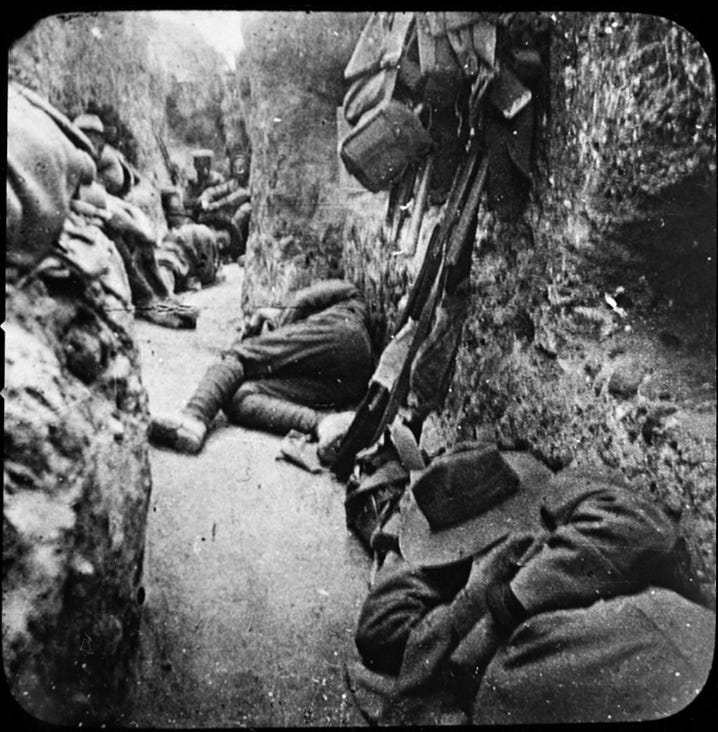
In Australia, one of the earliest national lessons is the Gallipoli campaign.
The landing on the Gallipoli Peninsula in April 1915 was poorly planned. Over eight months, Australian and New Zealand forces suffered devastating losses. By military standards, it failed.
Yet culturally, it forged identity.
Australia had federated in 1901 from six colonies — New South Wales, Victoria, Queensland, South Australia, Western Australia and Tasmania — but Gallipoli created cohesion through shared endurance.
The memory that endured was not triumph.
It was conduct under sustained pressure.
Units held exposed positions. Command structures adapted under fire. Individuals subordinated fear to commitment. Collapse was possible. It did not occur.
Integrity, in this sense, is staying coherent under stress.
For some of us, this framework was reinforced through exposure to Bushido — rectitude, courage, honour, disciplined loyalty. Different origins, same demand: align principle and action, especially when deviation seems easier.
Integrity is not a single trait.
It is a meta-virtue — a guiding principle. It integrates honesty, reliability, accountability, authenticity, and courage. It prevents fragmentation.
And fragmentation is exactly what pressure encourages.
When I first realised I should write about integrity — as a follow-on to Is Autonomy an Illusion? — my immediate reaction was visceral:
‘Ahhhhhhhhhhhhhhhhhhhhhhh, shit.’
Because autonomy is difficult.
Integrity is heavier.
Autonomy concerns capacity.
Integrity concerns cost.
But what felt like a personal weight revealed a universal challenge: when individuals yield principle, collective integrity falters.
Integrity Under Power
Integrity is most visible when authority resists constraint.
In September last year, U.S. Senators Mark Kelly and Elissa Slotkin, alongside several House members, released a public message urging military and intelligence personnel to uphold constitutional obligations and refuse unlawful orders.
The principle was clear: the law is supreme over executive will.
The response was immediate and punishing. Political condemnation. Investigatory threats. Pressure from institutions. The unspoken message was: loyalty to power should outweigh loyalty to process.
They did not retract.
A federal court later upheld Senator Kelly’s rights, and a grand jury declined to pursue criminal charges.
The lesson is structural:
Following rules when convenient is compliance.
Following rules when risky is integrity.
Institutions endure not only because laws exist, but because individuals within them internalise those laws and refuse to bend them for expedience. Integrity becomes informal enforcement, stabilising systems under stress.
It also challenges false narratives and refuses to perpetuate them, ensuring that truth, not convenience or fear, guides action.

Scaling Integrity: Individual → Communal → Institutional
Integrity begins with the individual:
Refusing to falsify.
Refusing to compromise principle for gain.
Standing by truth when risk is high.
But it does not remain private.
When exercised publicly, integrity creates precedent. Precedent shapes expectations. Expectations stabilise norms. Norms solidify culture. Culture informs institutional behaviour.
Individual coherence → communal trust → national identity → institutional durability.
Institutions mirror the character of the people within them.
When individuals fracture, institutions slowly erode.
When individuals maintain alignment, institutions stabilise.
The rule of law is the defensive perimeter — the trench line beyond which power should not advance. Integrity keeps that line visible.

Integrity in an Age of Leverage
We live in a world of indirect pressure:
Influence via media and narrative.
Economic and reputational coercion.
Bureaucratic obstruction and proxy capture.
These pressures reward fragmentation.
Integrity resists it. It stops the slow drift that comes when standards bend under subtle coercion. It prevents compromise from masquerading as pragmatism.
Resonance with the Battle of Gallipoli endures not because it won militarily, but because cohesion survived attrition.
Modern democracies face different terrain — information, economy, institutions — but the stress is the same. External forces probe for weakness. Internal forces test boundaries. Incentives distort alignment.
Integrity holds the line.
If influence is currency, integrity becomes defence.
Not symbolic defence. Structural defence.
It is coherence maintained across contexts, rewarded and penalised alike.
When enough individuals uphold it, institutions resist capture.
When institutions resist, nations endure pressure without surrendering identity.
Across traditions, from Bushidō to Buddhist precepts, integrity anchors ethical action — aligning conduct with principle even when fear, desire, or pressure would sway us.